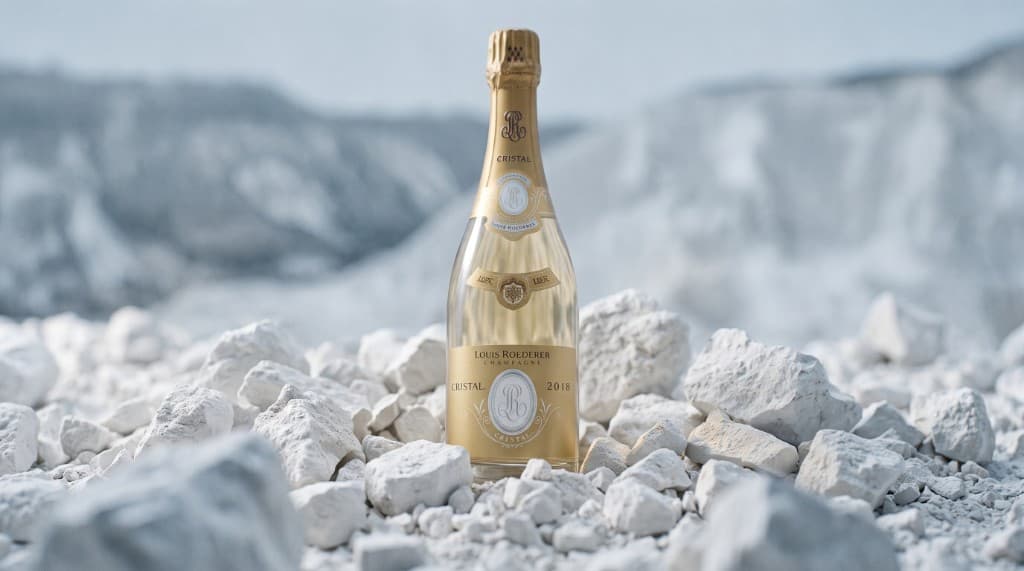
Louis Roederer Cristal 2018: a sun-drenched vintage that kept its edge
The house marks 250 years of history and 150 years of Cristal. But the anniversary is not the point. What the 2018 actually contains, what structurally sets Cristal apart from other prestige cuvées, and what the vintage changes in the glass.
Very few cuvées have a history longer than most nations. Louis Roederer Cristal is one of them. Created in 1876 at the request of Tsar Alexander II, it marks a double anniversary this year: 150 years of existence, and 250 years for the house that produces it. These figures are real, but they are not the reason to pay attention to Cristal. What follows might be.
The 2018 vintage releases this year. It is a good opportunity to understand what it actually contains and what structurally sets Cristal apart from other champagnes at the same price level.
Why Cristal is not a standard prestige cuvée
Most of the major Champagne houses belong to groups. LVMH owns Moët & Chandon, Dom Pérignon, Veuve Clicquot, Krug and Ruinart. Other listed groups control a large share of the prestige cuvée market. Louis Roederer, founded in Reims in 1776, is an exception: the house has remained family-owned and independent for seven generations. Frédéric Rouzaud, who runs it today, is its seventh representative.
This independence has concrete consequences. Cristal only exists as a vintage wine: there is no non-vintage version, no substitute cuvée for weaker years. If the year is not good enough, the cuvée is simply not made. This is a constraint that few large houses could impose on themselves without significant commercial risk.
The 250-hectare estate vineyard, farmed 100% organically, is another distinguishing feature. Cristal is assembled from 57 plots spread across the three main sectors of Champagne: the Montagne de Reims, the Vallée de la Marne and the Côte des Blancs. The grand crus involved include Verzenay, Verzy, Aÿ, Avize and Le Mesnil-sur-Oger.
The winemaking is also unusual for a champagne at this production scale. No malolactic fermentation is carried out: the malic acids from the grapes are retained in full, maintaining a natural tension in the wine. In a sector where MLF is the norm for rounding out wines and making them accessible young, this is a deliberate stylistic choice — and a constraint that demands grapes of exceptional ripeness. Partial ageing in oak (28% of the wines) adds complexity without trying to mimic a still wine.
The 2018 vintage: warm, generous, and yet fresh
The 2018 vintage in Champagne was warm, dry and generous. After a wet winter, a mild spring gave way to a prolonged and sunny summer that led to very early harvests — from 27 August to 8 September. Grapes were in excellent health, with high sugar levels and flawless sanitary quality.
For Cristal, this vintage profile creates an apparent paradox: a sunny year should logically produce an opulent, almost heavy wine with lower acidity. The opposite happens here, precisely because no malolactic fermentation is carried out. Without converting malic acids into softer lactic acid, the wine retains all its natural tension. The result is a Cristal 2018 that is simultaneously rich and fresh — a chalky freshness that is rare for a vintage this warm.
In the glass, the profile reads clearly without needing a sommelier’s vocabulary: ripe stone fruit (nectarine, citron) in the foreground, floral notes (orange blossom, pollen), and a complexity that opens with air into vanilla, smoke and bergamot. On the palate, the texture is full and concentrated, the bubble fine and well-integrated, and the finish saline and refreshing. The blend — 57% Pinot Noir, 43% Chardonnay — leans toward structure and body, tempered by the minerality of the Chardonnay terroirs.
The three anniversary bottles: which one and for whom
To mark the 250th anniversary of the house and the 150th anniversary of Cristal, Louis Roederer is presenting three bottles from the same cuvée at three different stages of evolution. Each one serves a different purpose.
The three Cristal anniversary releases
| Cuvée | Vintage | Profile | Readiness | Best for |
|---|---|---|---|---|
| Cristal | 2018 | Rich, fresh, saline, stone fruit | Young — potential 20+ years | Buying to cellar, or opening now with decanting |
| Cristal Rosé | 2015 | Creamy, red fruit, rose, chalk | Mid-evolution — fine drinking window | Drinking over the next 5 to 10 years |
| Cristal Late Release | 2008 | Complex, toasty, deep, long finish | Ready to drink now | Those who want a fully mature Cristal today |
Technical sheet
Louis Roederer Cristal 2018 — technical details
| Characteristic | Detail |
|---|---|
| House | Louis Roederer, Reims (founded 1776, family-owned) |
| Appellation | Champagne AOC |
| Vintage | 2018 |
| Grape varieties | 57% Pinot Noir, 43% Chardonnay |
| Dosage | 7 g/L (Brut) |
| Malolactic fermentation | None |
| Oak ageing | 28% of the wines |
| Vineyard | 57 plots, 250 ha, 100% certified organic |
| Harvest | 27 August to 8 September 2018 |
| Serving temperature | 9 to 11°C, tulip glass |
| Ageing potential | 20 years and beyond |
Frequently asked questions
- Why does Cristal not undergo malolactic fermentation?
- MLF converts malic acid (tense, nervous) into lactic acid (softer and creamier). Most major houses use it to make their wines accessible young. Louis Roederer forgoes it for Cristal in order to preserve the natural mineral tension of the grape — a choice that demands exceptional harvest quality and extends the wine’s ageing potential.
- What is a Cristal Late Release?
- A Late Release is a vintage champagne whose disgorgement has been deliberately delayed by several years. The wine ages much longer on the lees than is standard, developing toasty, brioche-like aromas and a deep, rich texture. The Cristal Late Release 2008 was recently disgorged: it is a 2008 Cristal ready to drink now.
- Does the warmth of 2018 compromise the wine’s freshness?
- In theory, warm vintages produce richer, less tense wines. For Cristal, the absence of malolactic fermentation changes the equation: the natural acids in the grape, which were well present in 2018 despite the heat, are not converted. The result is a more generous wine than cool vintages, but one whose freshness has not been sacrificed.
- How long can you keep the Cristal 2018?
- Louis Roederer describes this vintage as having exceptional ageing potential. For reference, the great Cristals from powerful vintages such as 2002 and 2008 are still excellent more than twenty years on. The 2018, with its preserved freshness despite a warm year, has similar potential. Store at 10-12°C, away from light, on its side.
- What is the difference between Cristal and Cristal Rosé?
- Both cuvées share the same winemaking approach (no MLF, estate-grown fruit), but differ in their blend and rosé technique. The Cristal Rosé uses an infusion technique — co-fermenting Chardonnay juice with a Pinot Noir maceration — which is rarer than assemblage or traditional saignée. Its profile leans toward red fruit, rose and a creamy texture.
- When is the right time to open the bottle?
- The Cristal 2018 can be enjoyed now, provided it is decanted for an hour beforehand to allow the aromas to open up. Its full expression will develop from 2028-2030, when the richness of the vintage begins to integrate fully with the wine’s minerality. Serve between 9 and 11°C in a tulip glass, not a flute.
More guides
Champagne Barons de Rothschild: twenty years to prove a name doesn’t make the wine
In 2005, the three branches of the Rothschild family joined forces to make their own champagne. The trade saw a marketing play. Twenty years on, the range tells a different story: Côte des Blancs, low dosage, single-plot cuvées and perpetual reserve.
Moët & Chandon Ice Impérial x Pharrell Williams: when champagne becomes a collector’s object
Pharrell Williams reimagines the Ice Impérial bottle for Moët & Chandon. Beyond the limited edition, this collaboration says something precise about where champagne is heading and who it is for.
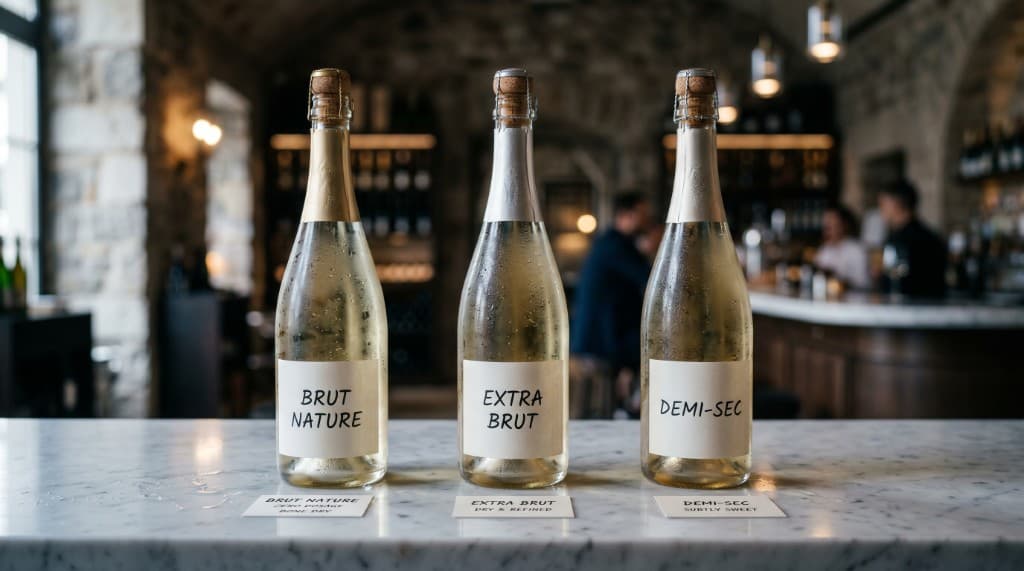
Brut, Extra Brut, Demi-Sec: understanding champagne dosage
The dosage, the small addition of sugar that finishes every bottle of champagne, is the least visible and most misunderstood factor in the price. Here is how to read it and use it to buy smarter.